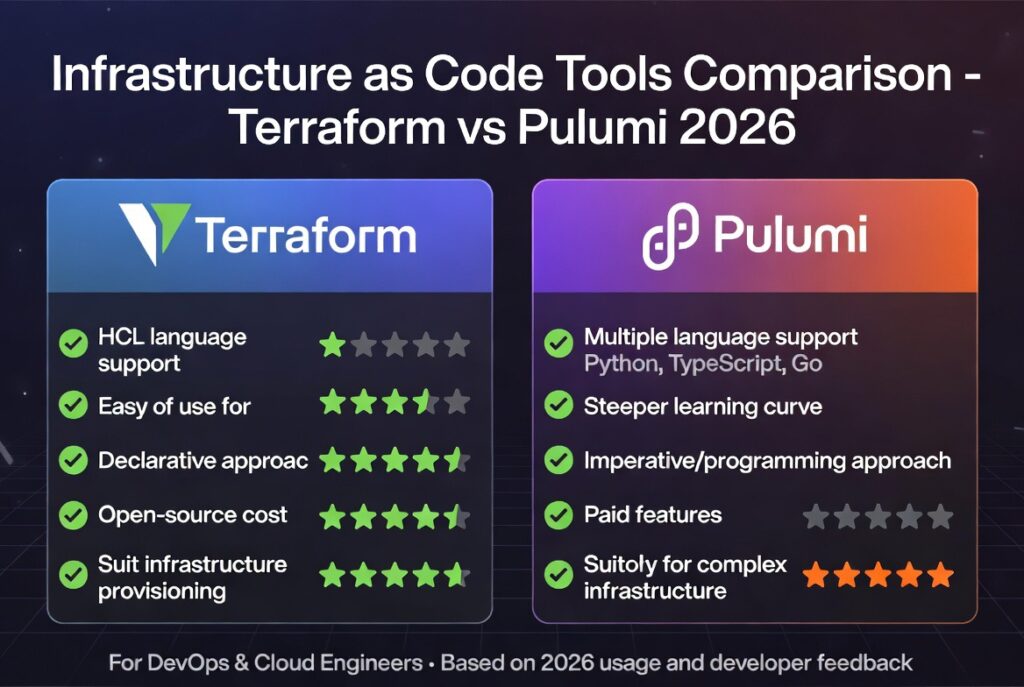
Infrastructure as Code Tools Comparison: Terraform vs Pulumi
Infrastructure as code tools comparison is essential for teams looking to automate cloud infrastructure deployment efficiently. As DevOps practices evolve, tools like Terraform and Pulumi are becoming critical for managing infrastructure at scale.
In this infrastructure as code tools comparison, we break down Terraform vs Pulumi across performance, flexibility, pricing, and real-world use cases so you can choose the best platform for your workflow.

If you’re new to DevOps automation, start with our
devops automation tools guide.
What Is Infrastructure as Code (IaC)
Infrastructure as Code (IaC) is a DevOps practice that allows developers to define and manage infrastructure using code instead of manual configuration. This approach improves consistency, scalability, and deployment speed.
- Automates infrastructure provisioning
- Ensures consistency across environments
- Reduces human error
- Supports version control and rollback
Learn more from the official Terraform documentation:
Terraform Docs
Top IaC Tools in This Infrastructure as Code Tools Comparison
This infrastructure as code tools comparison focuses on two of the most popular platforms used by developers and DevOps teams in 2026.
Terraform
Terraform, developed by HashiCorp, is the most widely adopted IaC tool. It uses a declarative configuration language called HCL (HashiCorp Configuration Language) to define infrastructure.
- Cloud-agnostic (AWS, Azure, GCP)
- Strong community support
- Large ecosystem of providers
Official site:
Terraform
Pulumi
Pulumi is a modern IaC tool that allows developers to use programming languages like JavaScript, Python, Go, and TypeScript to define infrastructure.
- Uses real programming languages
- Strong developer experience
- Supports multi-cloud environments
Official site:
Pulumi
Infrastructure as Code Tools Comparison: Terraform vs Pulumi
Below is a detailed infrastructure as code tools comparison across key decision factors.
1. Language Support
One of the biggest differences in this infrastructure as code tools comparison is language support.
- Terraform: Uses HCL (declarative language)
- Pulumi: Uses general-purpose languages (JavaScript, Python, Go)
Terraform’s HCL is easy to learn but limited compared to full programming languages. Pulumi offers flexibility and allows developers to reuse existing coding skills.
2. Cloud Integration
Both tools support major cloud providers, but their approach differs.
- Terraform: Extensive provider ecosystem
- Pulumi: Deep integration with cloud APIs
Terraform has broader support due to its maturity, while Pulumi offers more flexibility with API-level control.
3. Learning Curve
Learning curve is a critical factor in any infrastructure as code tools comparison.
- Terraform: Beginner-friendly
- Pulumi: Easier for developers with coding experience
Terraform is simpler for beginners, while Pulumi is more natural for experienced developers.
4. Flexibility and Customization
Pulumi provides more flexibility because it uses real programming languages.
- Terraform: Limited logic and control structures
- Pulumi: Full programming capabilities
This makes Pulumi ideal for complex infrastructure setups.
5. State Management
State management is essential in infrastructure as code tools comparison.
- Terraform: Uses state files (local or remote)
- Pulumi: Managed state via cloud backend
Terraform requires manual state management, while Pulumi simplifies this process.
6. Pricing
Pricing varies depending on usage and team size.
- Terraform: Free + enterprise plans
- Pulumi: Free tier + paid plans
Explore pricing details:
Pulumi Pricing
Terraform vs Pulumi: Pros and Cons
Terraform Pros
- Large community and ecosystem
- Proven reliability
- Multi-cloud support
Terraform Cons
- Limited programming flexibility
- State management complexity
Pulumi Pros
- Uses real programming languages
- Highly flexible
- Better for complex applications
Pulumi Cons
- Smaller ecosystem
- Slightly steeper learning curve for non-developers
When to Use Terraform vs Pulumi
Choosing between these tools depends on your project requirements.
- Use Terraform if: you want stability, simplicity, and strong community support
- Use Pulumi if: you prefer coding flexibility and advanced logic
For beginners, Terraform is often the best starting point. For advanced teams, Pulumi offers greater control.
Best Use Cases for Each Tool
Terraform Use Cases
- Multi-cloud deployments
- Standard infrastructure automation
- Enterprise DevOps workflows
Pulumi Use Cases
- Complex cloud applications
- Developer-centric workflows
- Dynamic infrastructure logic
Future of Infrastructure as Code Tools
Infrastructure as code tools comparison will continue to evolve as cloud computing grows. Future trends include:
- AI-assisted infrastructure automation
- Improved developer experience
- Better integration with CI/CD pipelines
Explore more DevOps trends in
Tech News.
🚀 Download DevOps Automation Roadmap
Want to master Infrastructure as Code faster? Download our free roadmap and learn the exact tools used by modern DevOps teams.
Conclusion
This infrastructure as code tools comparison shows that both Terraform and Pulumi are powerful tools for automating infrastructure. Terraform offers stability and simplicity, while Pulumi provides flexibility and developer-friendly features.
The best choice depends on your experience level, project complexity, and team workflow. By choosing the right tool, you can significantly improve deployment speed and infrastructure reliability.
FAQ
What is infrastructure as code tools comparison?
Infrastructure as code tools comparison evaluates platforms like Terraform and Pulumi based on features, pricing, and use cases.
Which is better Terraform or Pulumi?
Terraform is better for beginners and standard use cases, while Pulumi is better for developers who want flexibility and advanced programming features.
Is Terraform free?
Yes, Terraform offers a free open-source version, with paid enterprise features available.
Is Pulumi better than Terraform?
Pulumi can be better for complex projects due to its use of programming languages, while Terraform is better for simplicity and widespread adoption.

Leave a reply