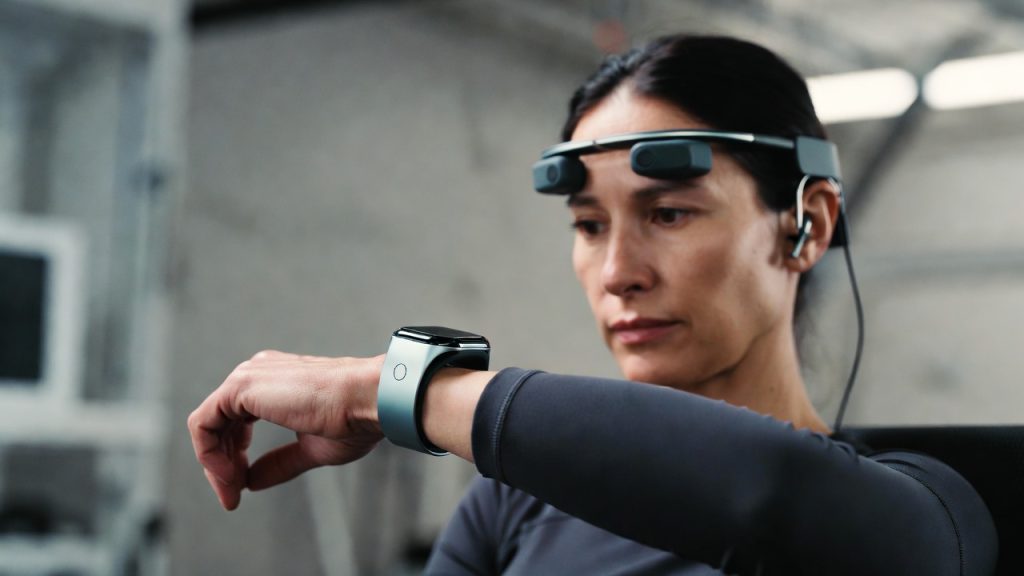
Wearable Technology 2026: Trends, AI, Smart Glasses and the Future of Personal Computing
For decades, computing followed a predictable path:
Desktop → Laptop → Smartphone.
In 2026, the next shift is becoming increasingly visible: computing is moving onto the human body.
Wearable technology has evolved from simple fitness trackers into intelligent hardware platforms capable of health monitoring, AI interaction, biometric authentication, environmental sensing and increasingly sophisticated augmented-reality experiences.
Wearables are no longer merely accessories. They are becoming personal computing layers — devices that continuously sense, analyze and respond to human activity.
This transformation is changing how hardware companies design products and how people interact with technology throughout the day.

What Is Wearable Technology in 2026?
Wearable technology in 2026 refers to connected devices worn on the body that combine sensors, wireless connectivity, software and increasingly AI-powered processing to monitor users, provide contextual assistance and interact with digital services.
The category now extends far beyond smartwatches and fitness bands. It includes smart rings, smart glasses, health-monitoring devices, hearables, connected clothing and emerging wearable interfaces.
The important change is that modern wearables are becoming more context-aware, intelligent and autonomous. Instead of waiting for users to open an application, they can continuously collect information and deliver assistance when it is relevant.
The Evolution of Wearable Technology
Phase 1: Fitness Tracking (2014–2018)
Early mainstream wearables focused primarily on basic health and activity tracking.
- Step counting
- Heart-rate monitoring
- Basic sleep tracking
- Notifications
At this stage, most wearable devices functioned primarily as smartphone extensions.
Phase 2: Smartwatch Expansion (2019–2023)
Wearables became increasingly capable computing platforms with:
- App ecosystems
- Improved health tracking
- Mobile payments
- Communication features
- GPS and location services
Smartwatches increasingly operated independently from smartphones for everyday tasks.
Phase 3: AI Wearables (2024–2026)
The latest generation introduces more intelligence directly into wearable experiences.
- On-device and edge AI processing
- Continuous health and activity analysis
- Context-aware assistance
- Environmental sensing
- Voice-based interaction
- Computer-vision capabilities in smart glasses
The result is a transition from reactive gadgets toward predictive and context-aware computing companions.
Why Wearables Matter More in 2026
Three technology developments are particularly important to the growth of wearable computing.
1. Miniaturized AI Chips
More efficient processors allow increasingly sophisticated machine-learning workloads to run directly on small devices without sending every task to the cloud.
2. Advanced Sensors
Modern wearable sensors can capture significantly more information about the wearer and their environment than early fitness trackers.
3. Better Battery and Power Management
More efficient processors, displays, connectivity components and power-management systems are helping manufacturers deliver greater functionality without dramatically increasing device size.
Together, these developments make continuous wearable computing increasingly practical.
Major Wearable Technology Trends in 2026
The wearable technology market is moving in several important directions. The biggest trends are not simply about adding more features to watches and glasses; they reflect a broader shift toward ambient, personal and context-aware computing.
1. Health Monitoring Is Becoming More Preventive
Health and wellness remain among the strongest use cases for wearable technology.
Modern devices can monitor and analyze metrics such as:
- Heart rate and heart-rate variability
- Blood oxygen levels
- Sleep patterns
- Activity and movement
- Skin temperature trends
- Exercise performance
- Stress-related indicators
The important evolution is not simply collecting measurements. AI and analytics can identify patterns across large amounts of historical data and present users with insights rather than isolated readings.
What Changed in 2026?
Wearables are increasingly being positioned as tools for early awareness and preventive health management. However, consumer wearable measurements should not automatically be treated as medical diagnoses, and medical claims require appropriate clinical and regulatory validation.
Healthcare organizations are also exploring ways to incorporate wearable-generated information into remote monitoring and digital-health workflows.
2. AI Assistants Are Moving From Phones to the Body
One of the most important wearable technology trends in 2026 is the movement of AI interaction away from traditional screens.
Instead of opening an application and typing a request, users can increasingly:
- Speak naturally to an AI assistant
- Receive contextual suggestions
- Get proactive reminders
- Ask questions hands-free
- Access information without reaching for a phone
This creates a more ambient form of computing in which AI is available throughout the day rather than only when a user actively opens an application.
The long-term implication is significant: the interface for AI may increasingly become the user’s environment rather than a smartphone screen.
3. Smart Glasses Are Becoming a Major Wearable Platform
Smart glasses are emerging as one of the most important categories in wearable computing because they combine hands-free interaction with cameras, microphones, speakers, connectivity and AI.
Potential capabilities include:
- Real-time translation
- Navigation assistance
- Hands-free notifications
- Visual AI recognition
- Voice assistants
- Augmented-reality experiences
- Contextual information about surroundings
Unlike earlier generations of smart glasses, newer products increasingly focus on comfort, battery efficiency, natural interaction and useful everyday applications.
Smart glasses could therefore become an important bridge between conventional smartphones and the broader vision of spatial computing.
4. Wearables Are Becoming Authentication Devices
Wearable devices can also become part of the authentication layer between people and their digital services.
Depending on the device and implementation, wearable systems may use signals such as:
- Heart-related biometric patterns
- Movement and behavioral patterns
- Proximity
- Device possession
- Other biometric signals
The broader concept is simple: the device you wear can become part of your digital identity.
This could make authentication more convenient while reducing reliance on passwords, although wearable-based authentication should complement rather than replace strong security practices.
5. Continuous Environmental Awareness
Wearables are increasingly designed to understand not only the person wearing them but also the environment around them.
Depending on the hardware, sensors can help monitor:
- Air quality
- Noise exposure
- UV exposure
- Temperature
- Movement and location
- Environmental conditions
This expands wearable computing from personal health tracking into environmental intelligence.
A wearable could eventually combine information about the user’s activity, location and surroundings to provide more relevant recommendations or alerts.
6. Edge AI Is Improving Wearable Privacy
Privacy is one of the biggest challenges facing wearable technology because these devices can collect highly personal information.
Edge AI provides one potential solution by allowing some processing to happen locally on the device rather than sending every piece of information to a remote cloud service.
Potential advantages include:
- Faster responses
- Reduced cloud dependency
- Lower bandwidth requirements
- Improved control over sensitive data
- Potentially better privacy for certain workloads
However, local processing does not automatically make a wearable private. Manufacturers still need strong encryption, secure software architecture, transparent data policies and effective access controls.
Wearable Technology 2026: Key Trends at a Glance
| Trend | Technology | Primary Benefit | Potential Impact |
|---|---|---|---|
| Health intelligence | Advanced sensors + AI | Continuous health insights | More proactive health management |
| AI wearables | On-device and cloud AI | Hands-free assistance | Less dependence on screens |
| Smart glasses | Computer vision + AI | Hands-free information | Growth of spatial computing |
| Wearable authentication | Biometrics + proximity | Convenient authentication | New digital identity models |
| Environmental sensing | Connected sensors | Contextual awareness | More intelligent personal computing |
| Edge AI | On-device processing | Speed and privacy | More autonomous devices |
The Hardware Innovation Behind Wearables
Wearable technology is pushing innovation across several hardware disciplines.
Semiconductor Design
Wearable processors need to deliver useful computing performance while consuming very little power. This makes ultra-low-power system design increasingly important.
Sensor Engineering
Smaller and more capable sensors allow manufacturers to collect more information without making devices significantly larger.
Materials Science
Lightweight and flexible materials can improve comfort, durability and the ability to integrate electronics into unconventional form factors.
Battery Technology
Battery capacity remains one of the biggest constraints on wearable hardware. Improvements in energy density, power management and charging technologies are therefore critical to future devices.
These advances do not remain isolated to wearables. They can influence the wider consumer electronics ecosystem.
Wearables and the Rise of Personal Data Ownership
As wearable devices collect increasingly detailed information about users, data ownership and privacy become strategic technology issues.
Important areas of development include:
- Encrypted local storage
- User-controlled data sharing
- Privacy-preserving AI processing
- Transparent data policies
- Decentralized identity technologies
Consumers are likely to pay greater attention to how companies collect, store, process and share wearable-generated data.
The winners in wearable computing will therefore need to compete not only on hardware features but also on trust.
Wearables in Professional and Industrial Use
Wearable technology is also moving beyond consumer electronics into professional environments.
Healthcare
Wearable devices can support remote patient monitoring and help healthcare professionals collect additional information between clinical interactions.
Manufacturing
Workers can use wearable systems for safety alerts, hands-free instructions and workflow assistance.
Logistics
Wearable displays and voice interfaces can provide hands-free instructions while workers remain focused on physical tasks.
Field Services
Smart glasses can potentially give technicians access to manuals, remote assistance and contextual information without requiring them to hold a separate device.
This means wearables are increasingly becoming productivity tools as well as lifestyle devices.
Challenges Facing Wearable Technology
Despite rapid innovation, wearable technology still faces significant limitations.
Battery Life
Small form factors limit battery capacity, while continuous sensing, displays, connectivity and AI processing consume power.
Data Accuracy
Consumers may interpret wearable measurements as more precise than they actually are. Products making medical claims must meet applicable validation and regulatory requirements.
Privacy
Wearables can collect information about health, location, behavior and surroundings. Poor privacy practices could undermine consumer trust.
Social Acceptance
Some wearable formats, particularly camera-equipped devices, can create concerns about privacy, etiquette and social acceptance.
Ecosystem Fragmentation
Compatibility between devices, operating systems, health platforms and applications remains imperfect.
The companies most likely to succeed will need to solve these problems alongside the hardware engineering challenges.
Wearables vs Smartphones: Replacement or Companion?
Wearables are unlikely to completely replace smartphones in the near term. Instead, computing is becoming increasingly distributed across multiple device categories.
| Device | Best For |
|---|---|
| Wearables | Instant interactions, health tracking and contextual assistance |
| Smartphones | Communication, applications and complex everyday tasks |
| PCs | Productivity, professional workloads and content creation |
This creates a new hierarchy in which the smartphone can increasingly function as a computing and connectivity hub while wearables handle more immediate interactions.
Economic Impact of Wearable Hardware
Wearables create recurring hardware opportunities through:
- Health and sensor improvements
- New AI capabilities
- Battery improvements
- New form factors
- Software ecosystems
- Subscription-based services
The business model is therefore expanding beyond selling a physical device. Hardware companies can build ecosystems around software, services, health platforms, AI assistants and accessories.
Our Analysis: The Real Breakthrough Is Ambient Computing
The most important wearable technology trend in 2026 may not be a specific smartwatch, ring or pair of glasses. It is the gradual transition from screen-based computing to ambient computing.
For decades, users had to consciously interact with computers: sit at a desk, open a laptop, unlock a phone or launch an application.
Wearables change that relationship.
A wearable can remain present throughout the day, collecting context and becoming available when needed. That creates a computing model where the technology becomes less visible while its intelligence becomes more accessible.
From a hardware perspective, this is a major shift. Success will increasingly depend on sensors, battery efficiency, edge AI, low-power processors, wireless connectivity and comfortable industrial design working together.
The winning wearable may ultimately be the device users think about the least.
The Future: Invisible Computing
The long-term direction of wearable technology is not necessarily more visible technology. It may be less visible technology.
Future wearable platforms could include:
- Smart clothing
- Biometric rings
- Neural interface technologies
- Embedded health sensors
- Advanced smart glasses
- AI-powered hearables
The underlying idea is that technology gradually blends into everyday life instead of demanding constant attention.
Why Wearable Technology Strengthens the Gadgets & Hardware Topic Cluster
Wearable technology sits at the intersection of several major hardware trends:
- AI-powered devices
- Semiconductor innovation
- Edge computing
- Smart ecosystems
- Consumer electronics
- Sensor technology
- Battery innovation
That makes wearable technology an important supporting topic for broader hardware coverage.
For more coverage, explore:
- Future of Gadgets & Hardware 2026
- AI-Powered Devices
- AI Smartphone Evolution
- Hardware Innovation and Technology Trends
What Will Wearable Technology Look Like by 2030?
By 2030, wearable technology is likely to become more integrated into everyday computing rather than existing as a separate gadget category.
Potential developments include:
- More continuous health monitoring
- AI-powered personal coaching
- More capable spatial-computing interfaces
- Context-aware digital assistants
- More integrated digital identity systems
- Smarter glasses and hearables
- More sophisticated biometric authentication
The exact form factor is difficult to predict, but the direction is clearer: computing is becoming increasingly personal, contextual and distributed.
Conclusion: Hardware Is Becoming Human-Centered
Wearable technology in 2026 represents a fundamental shift in computing philosophy.
Instead of forcing people to adapt to machines, hardware is increasingly adapting to human behavior.
The most important transformations include:
- AI moving closer to the user
- Health monitoring becoming more continuous and proactive
- Authentication becoming increasingly biometric and device-assisted
- Smart glasses expanding hands-free computing
- Edge AI reducing dependence on cloud processing for some workloads
- Interfaces becoming less visible
As computing moves onto the body, wearables will play an increasingly important role in the next generation of hardware innovation.
The future of technology is not simply about smarter devices. It is about technology that understands more about the human using it while demanding less attention in return.
Frequently Asked Questions About Wearable Technology in 2026
What is wearable technology in 2026?
Wearable technology in 2026 refers to connected devices worn on the body that combine sensors, wireless connectivity, software and increasingly AI-powered processing to monitor users, provide assistance and interact with digital services.
Are wearables replacing smartphones?
No. Wearables are primarily complementing smartphones by handling quick, contextual interactions while smartphones remain important for communication, applications and more complex tasks.
Are wearable devices safe for personal data?
Wearable privacy depends on how manufacturers collect, process, store and share information. Local processing, encryption and transparent privacy controls can reduce some risks, but consumers should still review the data practices of individual products.
What are the biggest wearable technology trends in 2026?
Major trends include AI-powered wearables, health monitoring, smart glasses, edge AI, biometric authentication, environmental sensing and increasingly ambient computing.
Why are wearables important for hardware innovation?
Wearables push innovation in low-power processors, sensors, batteries, wireless connectivity, materials and AI hardware. These developments can influence the broader consumer electronics industry.
Sources and Further Reading
For additional background on emerging wearable and human-computer interface technologies, see the National Library of Medicine research resource on neural interfaces.

Leave a reply