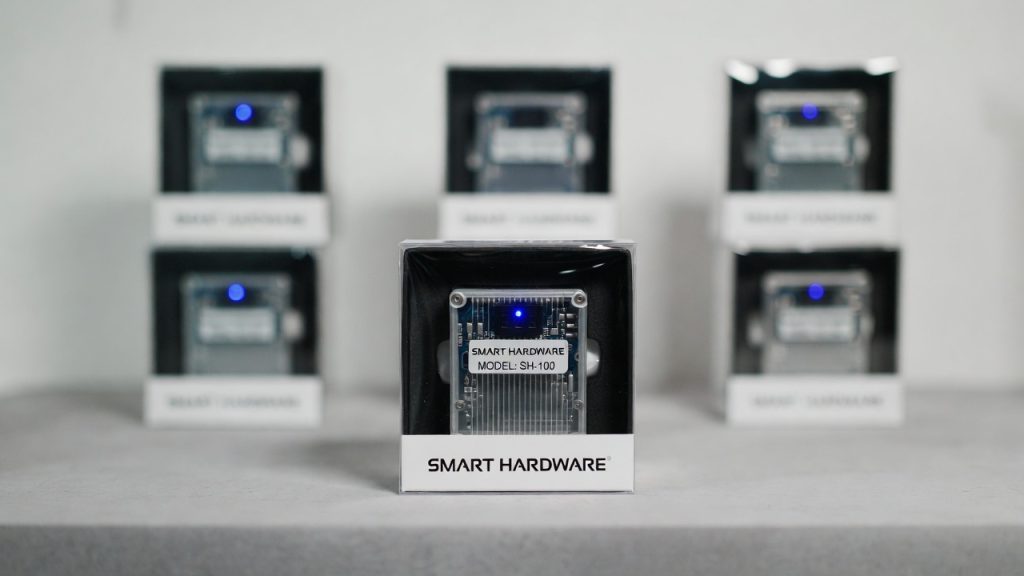
AI Devices 2026: How Smart Hardware Is Replacing Traditional Computing
AI devices 2026 are redefining personal computing by shifting artificial intelligence directly onto hardware rather than relying entirely on cloud services. Instead of devices acting as passive tools connected to remote servers, modern gadgets now process intelligence locally, enabling faster responses, improved privacy, and entirely new user experiences.
This transition represents one of the most important developments within gadgets and hardware trends 2026, where hardware and artificial intelligence are being designed together from the ground up.
Across smartphones, laptops, wearables, and home devices, AI is no longer an application — it is becoming the operating layer itself.

Why AI Devices Are Emerging Now
Several technological shifts converged to make AI-native hardware possible:
Specialized AI chips becoming mainstream
Energy-efficient neural processing units (NPUs)
Demand for real-time AI interaction
Privacy concerns around cloud processing
Faster semiconductor innovation cycles
Cloud AI created the first wave of intelligent software. However, latency and infrastructure costs revealed limitations.
Users now expect instant intelligence — not delayed responses dependent on internet connectivity.
As explored in our pillar guide on gadgets and hardware trends 2026, computing is moving toward distributed intelligence where devices themselves become smart.
What Defines AI Devices 2026
AI devices differ from traditional electronics in several fundamental ways.
Core Characteristics
1. On-device AI processing
Tasks run locally without constant cloud access.
2. Context awareness
Devices understand user behavior and environment.
3. Continuous learning
Systems adapt over time.
4. Energy-efficient intelligence
Dedicated processors handle AI workloads efficiently.
Examples include:
AI laptops summarizing meetings automatically
phones generating content offline
smart assistants predicting user needs
wearables analyzing health metrics in real time
AI capability is now a hardware feature — just like cameras or battery capacity once were.
AI PCs and the Reinvention of Personal Computing
The PC industry is undergoing its biggest transformation since mobile computing.
Manufacturers are integrating NPUs directly into processors, enabling laptops to run advanced AI models locally.
Companies like Intel and AMD are redesigning architectures specifically for AI workloads, while operating systems increasingly integrate AI assistants at the system level.
What AI PCs Can Do
Real-time language translation
automated coding assistance
background noise removal
intelligent battery optimization
AI-powered creative tools
Unlike cloud AI tools, these capabilities work instantly and privately.
The PC is evolving from a productivity device into an intelligent collaborator.
Smartphones Becoming AI Hubs
Smartphones remain central to ai devices 2026, but their role is changing dramatically.
Modern devices now include dedicated AI engines capable of:
photo enhancement in real time
voice understanding offline
predictive notifications
personalized automation routines
Manufacturers such as Apple and Qualcomm are prioritizing on-device AI acceleration as a core selling point.
Rather than sending personal data to servers, phones increasingly process sensitive information locally.
This shift improves:
speed
battery efficiency
privacy protection
The smartphone is becoming a personal AI assistant rather than merely a communication device.
Edge AI vs Cloud AI
Understanding ai devices 2026 requires distinguishing between edge AI and cloud AI.
| Cloud AI | Edge AI |
|---|---|
| Requires internet | Works offline |
| Higher latency | Instant response |
| Server-dependent | Device-powered |
| Scalable compute | Privacy-focused |
The future is not cloud or edge — but hybrid intelligence.
Cloud systems handle large training tasks, while devices perform everyday inference locally.
This hybrid model reduces infrastructure costs while improving user experience.
The Companies Leading AI Hardware Innovation
Several technology leaders are driving AI device adoption.
Chip Designers
NVIDIA continues to dominate AI acceleration with GPUs optimized for machine learning workloads, influencing both consumer and enterprise hardware ecosystems.
Mobile Chip Innovators
MediaTek and Qualcomm focus on integrating AI engines directly into mobile processors.
Ecosystem Builders
Apple’s vertical integration approach — combining hardware, silicon, and software — demonstrates how tightly optimized AI experiences can be achieved.
Competition among these companies accelerates innovation cycles across the industry.
Privacy and Performance Advantages
One major reason AI devices are growing rapidly is privacy.
On-device AI means:
fewer data uploads
reduced tracking risks
secure personal processing
Performance also improves because local processing removes network delays.
For users, this results in:
✅ faster responses
✅ better personalization
✅ longer battery life
✅ improved reliability
These benefits explain why AI capabilities are becoming headline features in device launches worldwide.
How AI Devices Change User Interaction
Traditional computing required explicit commands.
AI devices introduce proactive computing:
suggesting actions before requests
automating repetitive workflows
adapting interfaces dynamically
anticipating user intent
Computers are transitioning from tools into assistants.
This evolution connects directly with broader trends in wearable computing explored in wearable technology 2026.
Challenges Facing AI Devices 2026
Despite rapid growth, several challenges remain.
Hardware Cost
AI chips increase manufacturing expenses.
Energy Consumption
Running models locally requires efficient power management.
Software Optimization
Developers must redesign applications for AI-first hardware.
Consumer Understanding
Many users still do not fully understand AI features.
Overcoming these barriers will determine adoption speed over the next few years.
Economic Impact of AI Hardware
AI-native devices influence multiple industries:
education through adaptive learning devices
healthcare monitoring wearables
remote work productivity tools
creative industries using AI acceleration
Hardware innovation increasingly drives software capabilities rather than the reverse.
This reversal marks a historic shift in computing evolution.
Future Outlook: Beyond 2026
Looking forward, AI devices are expected to evolve toward:
Ambient Computing
Technology fades into the background.
Multi-Device Intelligence
AI follows users across devices seamlessly.
Personalized Models
Devices run AI trained specifically for individuals.
Autonomous Systems
Devices complete complex tasks independently.
The long-term vision is computing that feels invisible yet constantly helpful.
Conclusion
AI devices 2026 represent the beginning of a new computing paradigm where intelligence moves from distant servers into everyday hardware. Smartphones, PCs, wearables, and home gadgets are becoming proactive assistants capable of understanding context and delivering real-time value.
As AI and hardware continue merging, devices will no longer simply run software — they will actively participate in decision-making and productivity.
To understand the broader transformation reshaping consumer technology, explore our complete guide to gadgets and hardware trends 2026, which connects all major innovations defining the future of computing.
AI Devices in 2026 – Frequently Asked Questions
What are AI devices 2026?
AI devices are hardware products with built-in artificial intelligence processing capable of running models locally without constant cloud dependence.
Why is on-device AI important?
It improves speed, privacy, and reliability while reducing internet dependency.
Are AI PCs replacing traditional computers?
They are evolving them by integrating intelligent features directly into hardware systems.
Do AI devices need the cloud?
Yes, but primarily for training models rather than everyday processing.
Will all devices become AI-powered?
Industry trends suggest AI acceleration will become standard hardware functionality.

Leave a reply