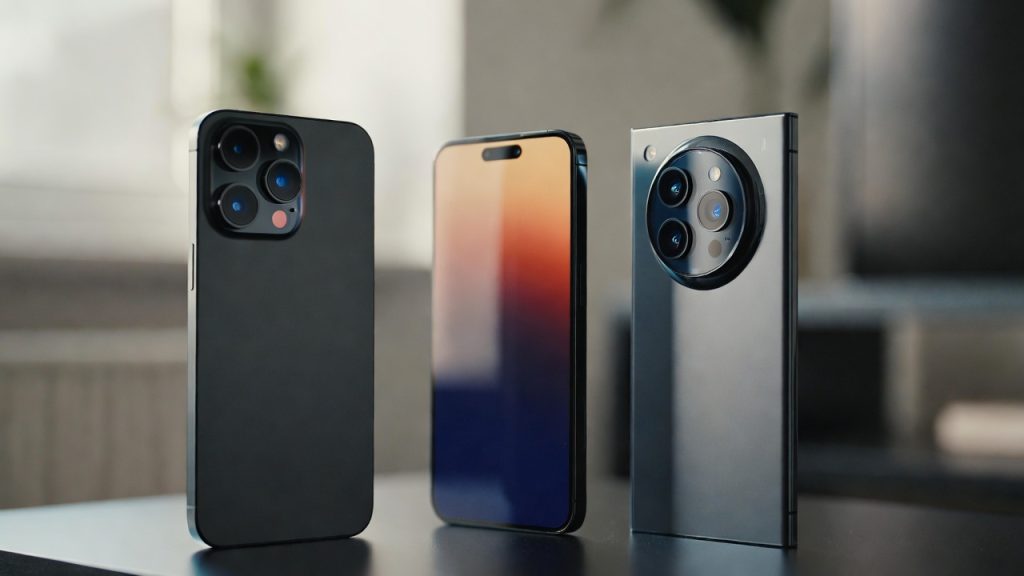
The Essential AI Smartphones 2026 Guide
AI smartphones 2026 are redefining what mobile devices can do, transforming smartphones from communication tools into intelligent computing hubs.
In 2026, artificial intelligence is no longer a cloud-only feature. It is embedded directly into the silicon, camera systems, operating systems, and security layers of modern smartphones. From real-time language translation to AI-powered photography and predictive battery management, AI smartphones 2026 are fundamentally changing user experience.
This shift is not incremental. It is architectural.

Why AI Smartphones 2026 Matter More Than Ever
For years, smartphones relied heavily on cloud processing for AI features. That created:
Latency delays
Privacy concerns
Network dependency
Higher energy consumption
In 2026, manufacturers are prioritizing on-device AI processing.
Industry leaders such as Apple, Google, and Samsung are designing smartphones capable of running complex AI models locally.
This improves:
✔ Speed
✔ Privacy
✔ Offline functionality
✔ Energy efficiency
AI smartphones 2026 are no longer marketing buzzwords. They represent a new mobile architecture.
The Core Technologies Powering AI Smartphones
AI smartphones 2026 rely on several technological breakthroughs working together.
1️⃣ Custom AI Chips
The biggest driver of AI smartphones 2026 is custom silicon.
Apple integrates Neural Engines within its chips
Google builds Tensor processors optimized for AI tasks
Qualcomm enhances Snapdragon AI engines
These chips accelerate:
Image processing
Voice recognition
Natural language generation
Predictive behavior modeling
Custom AI silicon allows smartphones to process trillions of operations per second without draining battery life.
2️⃣ On-Device Generative AI
One of the defining features of AI smartphones 2026 is embedded generative AI.
Devices can now:
Summarize emails
Rewrite messages
Generate images
Enhance videos in real time
Draft replies contextually
Unlike earlier AI tools, these functions often run locally, improving privacy.
This marks the transition from AI-assisted apps to AI-native operating systems.
3️⃣ AI-Enhanced Photography & Video
Cameras remain a top purchase driver.
AI smartphones 2026 use machine learning for:
Scene detection
Night mode optimization
Object removal
Background blur refinement
Real-time video enhancement
Computational photography is now more important than megapixels.
This shift aligns with innovation from companies like Sony in sensor technology and chip integration.
AI Smartphones and Privacy Evolution
Privacy concerns previously limited AI adoption.
In 2026, AI smartphones emphasize:
On-device processing
Secure enclaves
Encrypted AI models
Federated learning
Manufacturers are positioning AI as privacy-enhancing rather than privacy-threatening.
For example:
Apple promotes on-device intelligence
Google implements AI safety layers within Android
This architectural change is central to AI smartphones 2026.
Enterprise Adoption of AI Smartphones 2026
AI smartphones 2026 are not just consumer devices. Enterprises are adopting them for:
Automated meeting transcription
AI-powered CRM insights
Secure biometric authentication
Predictive task management
Intelligent workflow automation
In industries like logistics, healthcare, and finance, AI smartphones improve real-time decision-making.
Businesses now view AI smartphones as productivity multipliers.
AI Assistants Become Proactive Agents
Earlier voice assistants were reactive.
AI smartphones 2026 introduce proactive digital agents capable of:
Anticipating travel needs
Suggesting meeting summaries
Organizing files automatically
Managing schedules intelligently
This is driven by advanced mobile AI models integrated directly into operating systems.
The assistant is no longer a feature.
It is the interface.
Battery Optimization Through AI
Battery anxiety remains a major concern.
AI smartphones 2026 use predictive energy management to:
Learn user patterns
Allocate background resources intelligently
Shut down unused processes
Optimize charging cycles
AI improves efficiency without increasing battery size.
Energy optimization is now algorithmic, not purely hardware-based.
The Competitive Landscape of AI Smartphones 2026
The global race in AI smartphones 2026 is intensifying.
Major players include:
Apple
Samsung
Google
Xiaomi
Huawei
Competition centers on:
AI model efficiency
Chip performance
Privacy positioning
Ecosystem integration
Market analysts expect AI capability to become a primary upgrade driver in 2026.
AI Smartphones 2026 and Edge Computing
AI smartphones 2026 are tightly connected to edge computing expansion.
Instead of sending every request to centralized servers, devices now act as micro-edge nodes.
Benefits include:
Reduced latency
Lower bandwidth usage
Improved data sovereignty
Better real-time performance
This ties directly to broader mobile technology trends 2026.
Security Risks in AI Smartphones
While AI increases capability, it also introduces new risks:
AI-generated phishing messages
Deepfake impersonation
Malicious AI app integration
Model poisoning attacks
Companies are investing in AI threat detection embedded at the OS level.
Security in AI smartphones 2026 must evolve alongside capability.
What Consumers Should Look for in 2026
When evaluating AI smartphones 2026, consider:
✔ On-device AI processing capability
✔ AI chip generation
✔ Privacy architecture
✔ Long-term software updates
✔ Enterprise-grade security
✔ Ecosystem integration
AI performance will soon matter more than raw hardware specifications.
The Future of AI Smartphones Beyond 2026
Looking ahead:
AI models will shrink further for on-device deployment
Devices may act as personal AI data vaults
Cross-device AI synchronization will improve
Phones may serve as controllers for AI-powered environments
AI smartphones 2026 are only the beginning.
The mobile device is evolving into a personal intelligence engine.
Final Thoughts
AI smartphones 2026 mark the most significant smartphone transformation since the introduction of app ecosystems.
Artificial intelligence is no longer a feature layered on top of mobile devices.
It is the foundation.
The companies that win in 2026 will be those that:
Integrate AI deeply into hardware
Prioritize privacy
Optimize performance
Deliver seamless AI-native experiences
The smartphone era is not ending.
It is becoming intelligent.

Leave a reply