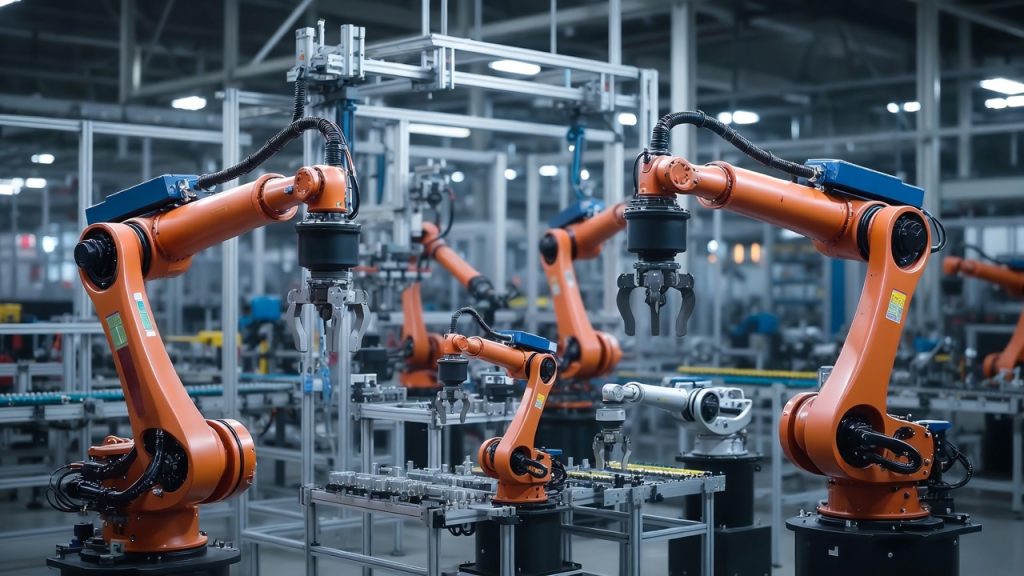
Complete Robotics Automation Trends 2026 Guide: Industry Transformation Through Intelligent Machines
Robotics automation trends 2026 highlight how intelligent machines powered by artificial intelligence are transforming manufacturing, logistics, healthcare, agriculture, and service industries worldwide. Robots are no longer limited to factory assembly lines — they now operate in warehouses, hospitals, offices, and even customer-facing environments.
As discussed in our future tech trends pillar, robotics represents the physical extension of artificial intelligence into the real world. While software automation reshapes digital workflows, robotics brings automation into physical environments, redefining productivity and operational efficiency.

Definition: Robotics Automation Trends 2026
Robotics automation combines mechanical engineering, sensors, and AI-driven software systems to perform tasks autonomously or collaboratively with humans. Modern robots are capable of perception, decision-making, and adaptation using machine learning algorithms.
Unlike traditional industrial machines programmed for repetitive actions, intelligent robots continuously learn from data and improve performance over time.
How Modern Robotics Works
Modern robotic systems integrate several advanced technologies working together:
- Computer vision systems allowing robots to interpret visual environments
- Machine learning decision models enabling adaptive behavior
- Sensors and real-time analytics for navigation and safety
- Cloud-connected control systems supporting updates and coordination
- Edge AI processing enabling instant local decision-making
These components allow robots to operate dynamically rather than follow fixed scripts. For example, warehouse robots can reroute automatically when obstacles appear, improving efficiency without human intervention.
Major Robotics Automation Trends
1. Collaborative Robots (Cobots)
Collaborative robots, commonly called cobots, are designed to work safely alongside humans. Unlike traditional industrial robots that operate in isolated cages, cobots use sensors and AI to detect human movement and adjust behavior instantly.
Cobots are increasingly used in:
- Electronics manufacturing
- Small-scale assembly operations
- Packaging and quality inspection
- Medical laboratories
The affordability and flexibility of cobots make automation accessible to small and medium-sized businesses.
2. AI-Powered Warehousing and Logistics
E-commerce growth has accelerated automation in logistics. AI-powered robots now manage sorting, picking, and inventory tracking at massive scale.
Key capabilities include:
- Autonomous navigation inside warehouses
- Real-time inventory optimization
- Predictive demand forecasting
- Automated packaging workflows
Automation significantly reduces delivery times while lowering operational costs.
3. Service Robotics Expansion
Service robots are expanding beyond industrial use into everyday environments. These robots assist humans rather than replace them.
Examples include:
- Hospital delivery robots transporting medical supplies
- Hotel concierge robots assisting guests
- Retail inventory scanning robots
- Cleaning and sanitation robots
Service robotics adoption increased as organizations sought efficiency and safety improvements in customer-facing environments.
4. Autonomous Inspection and Maintenance
Drones and mobile robots now perform inspections in hazardous or remote environments such as oil facilities, power plants, and infrastructure networks.
Benefits include:
- Improved worker safety
- Continuous monitoring
- Reduced downtime
- Predictive maintenance capabilities
Industry Adoption Examples
Robotics adoption varies across industries but follows a consistent pattern: automation first enhances efficiency, then reshapes workflows.
- Manufacturing: Smart factories integrate robots with AI analytics.
- Healthcare: Robot-assisted surgery improves precision and recovery outcomes.
- Logistics: Automated fulfillment centers process millions of packages daily.
- Agriculture: Autonomous machines support planting and harvesting.
- Construction: Robotics assist surveying and repetitive building tasks.
These implementations demonstrate robotics transitioning from experimental technology into essential infrastructure.
Economic Impact of Robotics Automation
Automation plays a critical role in addressing labor shortages, rising operational costs, and productivity demands.
Economic effects include:
- Higher production efficiency
- Reduced workplace injuries
- Lower operational expenses over time
- Creation of new technical job categories
Studies suggest automation historically increases total economic output even as job roles evolve.
Rather than eliminating employment entirely, robotics shifts workers toward supervision, maintenance, analysis, and creative problem-solving roles.
Connection to Workforce Evolution
Robotics automation directly connects to broader AI workforce transformation trends discussed in:
While AI automates digital tasks, robotics automates physical workflows. Together, they form a unified automation ecosystem shaping the future economy.
Human–Robot Collaboration
One of the defining trends of 2026 is collaboration rather than replacement. Humans increasingly manage robotic fleets, analyze performance data, and design automated workflows.
New hybrid roles include:
- Robot operations managers
- Automation workflow engineers
- AI robotics technicians
- Human-robot interaction designers
This collaboration model improves productivity while maintaining human oversight and creativity.
Challenges Slowing Adoption
Despite rapid progress, robotics adoption still faces challenges:
- High initial investment costs
- Integration complexity with legacy systems
- Workforce reskilling requirements
- Ethical and regulatory concerns
However, decreasing hardware costs and cloud-based robotics platforms are reducing these barriers each year.
Predictions for 2030
Industry analysts forecast significant expansion in robotics adoption by the end of the decade:
- Robots integrated into small and medium businesses
- Autonomous logistics networks connecting cities
- AI-driven manufacturing ecosystems
- Smart infrastructure maintained by robotic inspection systems
- Consumer-facing household robotics expansion
Automation is expected to become as common as cloud computing is today.
Expert Perspective
Industry researchers increasingly compare robotics automation to previous industrial revolutions. Just as mechanization transformed agriculture and electricity transformed manufacturing, intelligent robotics is redefining modern productivity.
Organizations investing early in robotics gain competitive advantages through scalability, consistency, and data-driven optimization.
Experts emphasize that the future economy will not be defined by human labor alone but by how effectively humans orchestrate intelligent machines.
References
Conclusion
Robotics automation trends 2026 demonstrate how artificial intelligence moves beyond software into physical environments, reshaping industries and redefining productivity worldwide.
The next phase of technological progress will be driven not only by smarter algorithms but by intelligent machines capable of interacting with the physical world. Businesses and workers that adapt to human-robot collaboration will benefit most from this transformation.
FAQs
Are robots replacing workers?
Robots automate repetitive and hazardous tasks while humans focus on strategic, creative, and supervisory roles.
Which industries adopt robotics fastest?
Manufacturing, logistics, healthcare, and warehousing currently lead robotics adoption.
Will robotics become affordable?
Yes. Hardware costs continue decreasing while cloud robotics platforms reduce deployment barriers.

Leave a reply