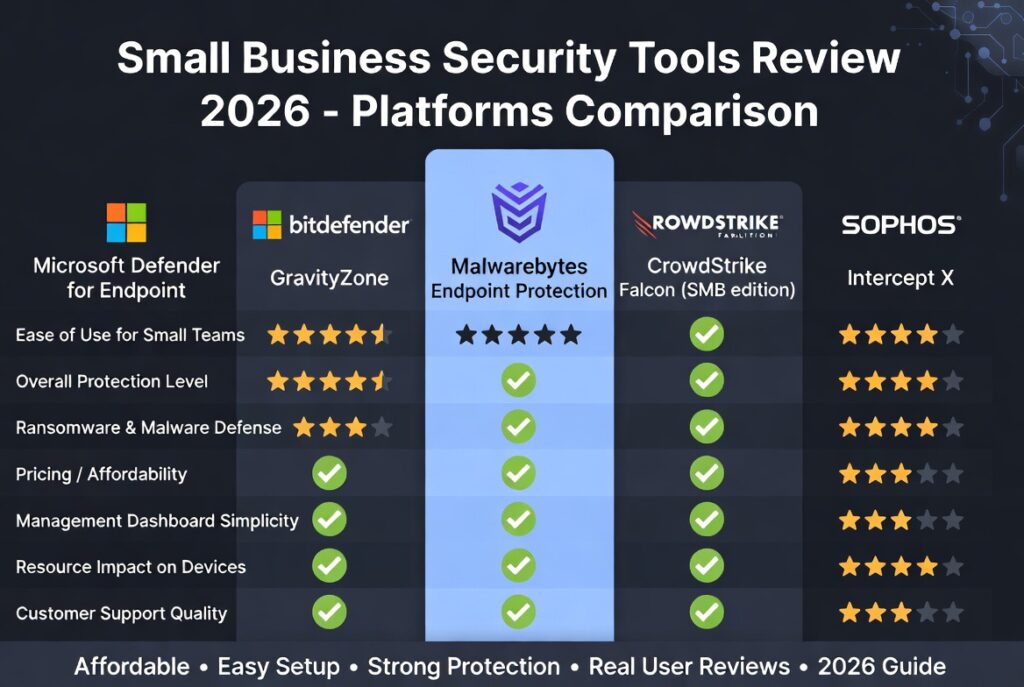
Small Business Security Tools Review: Best Protection Platforms
Small business security tools review is essential in 2026 as cyber threats continue to target smaller organizations with limited security resources. Unlike large enterprises, small businesses often lack dedicated cybersecurity teams, making the right tools critical for protecting data, systems, and customer information.
This guide provides a complete small business security tools review, covering top platforms, performance analysis, pros and cons, pricing considerations, and best use cases to help you choose the right solution.
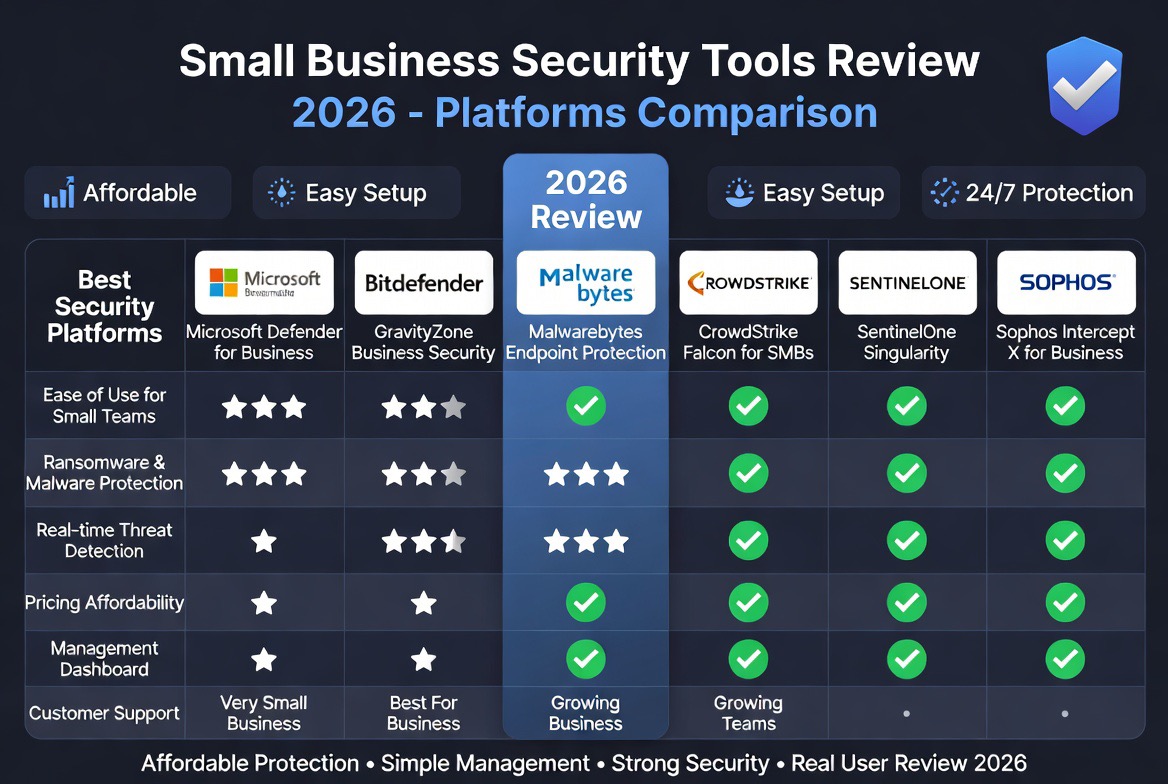
If you’re just getting started, explore our full guide on
cybersecurity tools for small businesses.
Why Small Business Security Tools Matter
Small businesses are increasingly targeted by cybercriminals due to weaker defenses and valuable data. A single breach can lead to financial loss, reputational damage, and legal consequences.
According to
Verizon Data Breach Investigations Report
, a significant percentage of cyberattacks target small and medium-sized businesses.
- protect sensitive customer data
- prevent ransomware attacks
- secure business operations
- ensure compliance with regulations
Top Security Tools Reviewed
Below is a detailed small business security tools review of the most effective platforms available in 2026.
Endpoint Security Platforms
Endpoint security tools protect devices such as laptops, desktops, and mobile devices from threats.
- real-time threat detection
- device monitoring
- centralized management
Popular providers include
CrowdStrike and
Sophos.
Cloud Security Tools
Cloud-based tools protect data stored in cloud services such as Google Workspace and Microsoft 365.
- data encryption
- access control
- threat detection
Solutions like
Microsoft Defender provide integrated protection.
Password Management Tools
Password managers help businesses enforce strong password policies and reduce credential-based attacks.
- secure password storage
- team access management
- multi-factor authentication
Tools like
1Password Business are widely used.
Email Security Platforms
Email security tools protect against phishing attacks, spam, and malicious attachments.
- phishing detection
- spam filtering
- attachment scanning
Platforms such as
Mimecast and
Proofpoint are leading solutions.
Performance Analysis
When conducting a small business security tools review, performance is a critical factor. The effectiveness of a tool depends on its ability to detect threats, respond quickly, and operate efficiently without slowing down systems.
Detection Rate
Top tools offer high detection rates for malware, ransomware, and phishing attacks using AI-driven analysis.
System Impact
Lightweight tools minimize CPU and memory usage, ensuring smooth system performance.
Ease of Use
Small businesses benefit from tools with simple dashboards and minimal configuration requirements.
Integration
Modern tools integrate with cloud platforms, email systems, and existing IT infrastructure.
Pros and Cons
Advantages
- automated threat detection
- centralized management
- scalable solutions
- improved compliance
Disadvantages
- subscription costs
- learning curve for advanced features
- potential integration challenges
To compare tool performance in detail, visit our
endpoint security tools comparison.
Best Use Cases
Different businesses require different security setups. This small business security tools review highlights the best use cases for each category.
Retail Businesses
- POS system protection
- customer data security
Remote Teams
- endpoint security
- VPN and secure access tools
Startups
- cloud security platforms
- scalable security tools
Freelancers
- password managers
- basic antivirus tools
Beginners should also review our
beginner guide.
How to Choose the Right Security Tool
Choosing the right tool depends on several factors:
- business size and industry
- budget constraints
- data sensitivity
- technical expertise
Start with essential tools and expand your security stack as your business grows.
Stay updated on security trends via
Tech News.
Future Trends in Small Business Security
Cybersecurity tools are evolving rapidly with advancements in AI and automation.
- AI-powered threat detection
- automated incident response
- zero-trust security models
These innovations will make enterprise-level security accessible to small businesses.
Conclusion
This small business security tools review shows that choosing the right cybersecurity platform is essential for protecting your business in 2026. With the right combination of tools, small businesses can defend against modern threats and operate securely.
Investing in cybersecurity is not just a technical decision—it’s a business necessity.
FAQ
What are the best security tools for small businesses?
The best tools include endpoint security platforms, password managers, email security tools, and cloud security solutions.
How much do small business security tools cost?
Costs vary from free tools to enterprise solutions costing hundreds of dollars per year depending on features and users.
Are cybersecurity tools necessary for small businesses?
Yes, cybersecurity tools are essential to protect against data breaches, malware, and phishing attacks.
What is the most important security tool?
Endpoint security is one of the most important tools as it protects devices that connect to business networks.
Written by Wale Steve a developer with experience in SaaS security systems.

Leave a reply