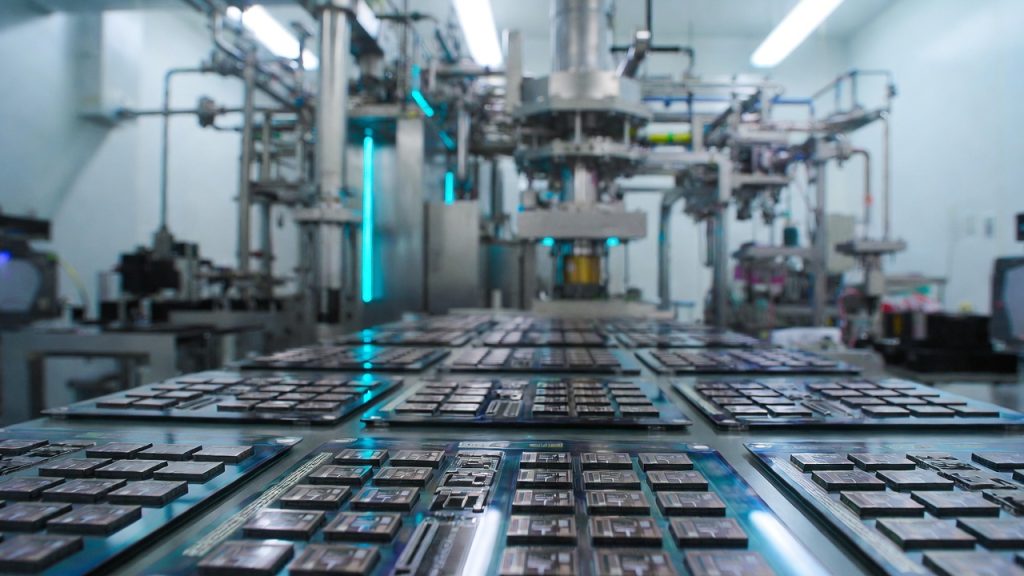
Chip Technology Trends 2026: The Semiconductor Race Powering AI
Chip technology trends 2026 are reshaping the global technology industry as semiconductors become the foundation of artificial intelligence, consumer electronics, and next-generation computing systems. Every major technological breakthrough — from AI devices to autonomous systems — now depends on advanced chip design and manufacturing capabilities.
After years of incremental progress, the semiconductor industry has entered a new acceleration phase driven by AI workloads, geopolitical competition, and demand for energy-efficient computing.
As explored in our pillar guide on gadgets and hardware trends 2026, hardware innovation today begins at the silicon level.

Why Semiconductors Matter More Than Ever
Semiconductors are often invisible to consumers, yet they power nearly every modern technology:
smartphones
laptops
cloud infrastructure
vehicles
smart home devices
AI systems
In chip technology trends 2026, chips are no longer generic processors. Instead, companies design silicon optimized for specific workloads.
AI has fundamentally changed chip requirements.
Traditional CPUs cannot efficiently handle neural network computation at scale. This led to the rise of specialized architectures built specifically for machine learning.
The Core Chip Technology Trends 2026
Several major shifts define the semiconductor landscape.
1. AI-First Chip Design
Modern processors now prioritize AI acceleration rather than general computing performance.
2. Heterogeneous Computing
Devices combine:
CPU
GPU
NPU
dedicated accelerators
Each component handles different tasks efficiently.
3. Advanced Packaging
Chiplets allow multiple smaller chips to function as one powerful processor, improving yield and scalability.
4. Edge Optimization
Chips increasingly support on-device AI inference for smartphones and wearables.
AI Accelerators and Specialized Chips
AI workloads require massive parallel processing capabilities.
Companies such as NVIDIA pioneered GPU acceleration for machine learning, transforming graphics processors into AI engines.
Meanwhile, Google developed Tensor Processing Units (TPUs) optimized for neural networks.
Specialized AI chips now power:
generative AI tools
robotics
autonomous vehicles
smart assistants
enterprise analytics systems
This specialization marks a shift away from universal processors toward workload-specific silicon.
The Race to Smaller Manufacturing Nodes
One of the defining chip technology trends 2026 is the push toward smaller fabrication nodes.
Manufacturing leaders like TSMC and Samsung Electronics are advancing toward 2-nanometer processes.
Why Smaller Nodes Matter
Smaller transistors enable:
faster performance
lower power consumption
increased transistor density
improved battery efficiency
However, shrinking nodes also dramatically increases production complexity and cost.
Modern semiconductor fabs cost tens of billions of dollars to build.
Foundry Competition and Global Supply Chains
Semiconductor manufacturing has become a geopolitical priority.
Governments now invest heavily to secure chip independence.
Key industry players include:
Intel expanding domestic manufacturing initiatives
TSMC maintaining leadership in advanced nodes
Samsung competing aggressively in both memory and logic chips
Supply chain resilience became critical after global disruptions revealed how dependent industries are on semiconductor production.
Chip manufacturing now influences national security and economic strategy.
Energy Efficiency: Performance Per Watt Becomes King
AI computing consumes enormous energy.
As a result, chip designers focus less on raw speed and more on performance per watt.
Efficiency improvements enable:
longer smartphone battery life
cooler laptops
sustainable data centers
wearable device viability
Low-power AI processing is essential for the rise of ai devices 2026, where intelligence must run continuously without draining batteries.
Chips Powering AI Devices
The explosion of AI hardware depends entirely on semiconductor progress.
Modern devices include:
Neural Processing Units (NPUs)
AI accelerators in mobile processors
integrated machine learning cores
Companies like Qualcomm integrate AI engines directly into mobile chipsets, allowing smartphones to run advanced models locally.
This enables features such as:
offline voice assistants
real-time translation
AI photography
predictive automation
The boundary between hardware and software continues to blur.
Memory Innovation and AI Workloads
AI models require enormous memory bandwidth.
New memory technologies are emerging:
High Bandwidth Memory (HBM)
stacked DRAM architectures
faster cache hierarchies
Memory speed increasingly determines AI performance as much as processing power.
Future chips will optimize data movement as aggressively as computation itself.
Challenges Facing the Semiconductor Industry
Despite rapid innovation, significant obstacles remain.
Rising Costs
Advanced fabrication requires extreme capital investment.
Talent Shortages
Chip engineering expertise is limited globally.
Supply Chain Risks
Geopolitical tensions affect production stability.
Physical Limits
Moore’s Law scaling becomes increasingly difficult.
These constraints drive innovation in architecture rather than simple miniaturization.
Economic Impact of Semiconductor Innovation
Semiconductor progress influences nearly every sector:
consumer electronics
automotive automation
healthcare diagnostics
cloud computing
telecommunications infrastructure
The semiconductor industry effectively determines the pace of technological progress worldwide.
Future Outlook: Chips Beyond 2026
The next decade may introduce radical changes.
Chiplet Architectures
Modular silicon replaces monolithic chips.
AI-Designed Chips
Machine learning assists hardware engineering.
Optical Computing Experiments
Light-based processors could reduce energy consumption dramatically.
Quantum Integration
Hybrid classical-quantum systems may emerge for specialized workloads.
Semiconductors will remain the foundational layer of innovation.
Conclusion
Chip technology trends 2026 demonstrate that the future of computing begins at the silicon level. As AI reshapes software, semiconductor innovation determines what is technologically possible.
From AI devices and wearable technology to next-generation consumer electronics, every advancement depends on faster, more efficient, and more specialized chips.
Understanding semiconductor evolution is essential to understanding the broader transformation explored in our gadgets and hardware trends 2026 pillar guide.
Hardware innovation starts with silicon — and silicon is entering its most competitive era yet.
Chip Technology Trends in 2026 – Frequently Asked Questions
What are chip technology trends 2026?
They include AI-optimized processors, smaller manufacturing nodes, advanced packaging, and energy-efficient semiconductor designs.
Why are AI chips different from traditional processors?
They are optimized for parallel computation required by machine learning models.
Who leads semiconductor manufacturing?
Companies like TSMC, Samsung, and Intel dominate advanced chip production.
Why are smaller nodes important?
They improve performance while reducing energy consumption.
Will chip demand continue growing?
Yes, AI adoption across industries ensures long-term semiconductor demand.

Leave a reply