Startup Funding Slowdown 2026: What’s Really Happening?
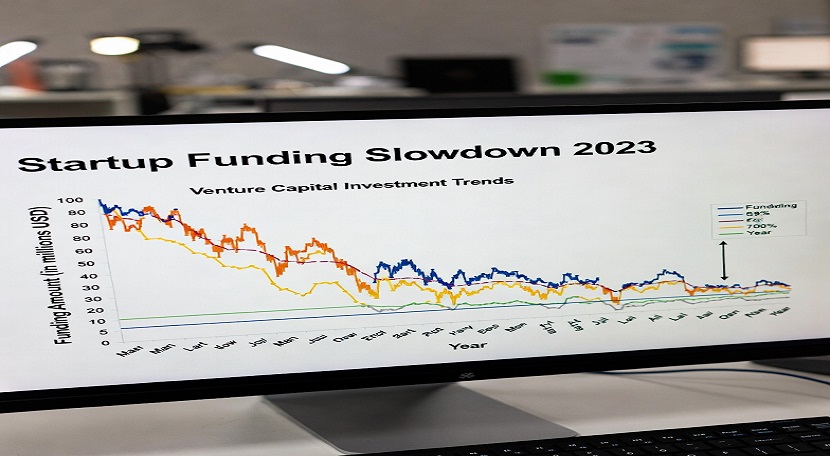
The startup funding slowdown 2026 is redefining how venture capital flows across the global tech ecosystem.
After years of aggressive investment and sky-high valuations, capital markets have tightened. Investors are prioritizing profitability, sustainable growth, and strategic focus over rapid expansion.
But is this a collapse — or a market correction?
In this deep analysis, we break down the causes of the startup funding slowdown 2026, its impact on AI and tech startups, and what founders should do next.

Why the Startup Funding Slowdown 2026 Is Happening
Several macroeconomic and structural factors are driving the startup funding slowdown 2026.
1. Higher Interest Rates
When interest rates rise:
Capital becomes more expensive
Venture returns face pressure
Risk appetite declines
Investors shift from speculative growth to safer assets.
2. Valuation Reset
Many startups raised funding during peak valuation cycles. The startup funding slowdown 2026 reflects a recalibration of:
Revenue multiples
Growth expectations
Exit timelines
Down rounds are becoming more common.
3. AI Investment Concentration
While AI remains hot, funding is consolidating around:
Infrastructure players
Enterprise AI solutions
Proven revenue models
This leaves many early-stage startups struggling to raise capital.
How Startup Funding Slowdown 2026 Impacts Founders
The startup funding slowdown 2026 forces founders to rethink growth strategies.
Shift Toward Profitability
Investors now prioritize:
Positive unit economics
Strong gross margins
Efficient customer acquisition
Growth-at-all-costs strategies are losing favor.
Longer Fundraising Cycles
Founders report:
More investor meetings
Increased due diligence
Slower term sheet negotiations
Capital is still available — but harder to secure.
Increased Scrutiny
Startups must demonstrate:
Clear product-market fit
Sustainable burn rate
Realistic expansion plans
The startup funding slowdown 2026 rewards disciplined operators.
Sector Breakdown During Startup Funding Slowdown 2026
Not all sectors are equally affected.
AI & Deep Tech
AI continues attracting investment, especially in:
Enterprise automation
AI infrastructure
Custom silicon integration
However, investors prefer defensible, technical differentiation.
Fintech
Fintech faces tighter regulatory pressure and increased compliance costs, reducing speculative investments.
Web3 & Crypto
Volatility and regulatory scrutiny have slowed capital flow into this segment.
Climate Tech
Climate-focused startups remain relatively resilient due to long-term global sustainability goals.
The startup funding slowdown 2026 impacts sectors differently depending on regulatory and revenue maturity.
Venture Capital Strategy in 2026
VC firms are adapting to the startup funding slowdown 2026 with new investment frameworks.
Portfolio Protection
Firms are:
Reserving more capital for follow-on rounds
Supporting existing portfolio companies
Avoiding overexposure
Focus on Quality Over Quantity
Instead of funding many startups, investors are concentrating capital into fewer, stronger bets.
Emphasis on Revenue
Recurring revenue and enterprise contracts carry more weight than user growth metrics.
The startup funding slowdown 2026 is shifting venture culture from aggressive scaling to measured execution.
Link to Broader Tech Trends
As covered in:
Chip Wars 2026 — semiconductor competition is reshaping infrastructure costs
AI Regulation 2026 — compliance is increasing operational complexity
Big Tech Restructuring 2026 — corporations are streamlining teams
These macro forces directly contribute to the startup funding slowdown 2026.
When large tech companies cut costs, acquisition activity also slows — reducing exit opportunities for startups.
The startup funding landscape in early 2026 remains selective and uneven, with capital flowing robustly into AI and high-conviction areas while non-AI or less differentiated ventures face longer raise cycles, valuation pressure, and higher bars for traction. This dynamic is amplified by broader industry shifts, including hardware bottlenecks that limit scalable AI infrastructure and force founders to rethink compute costs and timelines. Our deep dive into The Shocking Chip Wars 2026 Escalation reveals how U.S.-China export controls, TSMC capacity strains, and geopolitical risks are creating compute scarcity that disproportionately affects AI startups reliant on advanced GPUs—pushing many to seek alternative funding paths or partnerships amid these constraints. Explore the full Chip Wars 2026 breakdown here.
Regulatory headwinds are adding another layer of complexity to fundraising, as compliance requirements for AI systems—transparency mandates, risk assessments, and ethical frameworks—demand dedicated resources that can strain lean startups’ runways. In a market where investors prioritize defensible moats and regulatory readiness, these rules are influencing where capital concentrates and how founders pitch sustainability. The Complete AI Regulation 2026 Update details the latest phased enforcements (e.g., EU AI Act high-risk obligations ramping toward August 2026, U.S. state laws like Colorado’s impact assessments), showing how they intersect with funding decisions and force pivots toward compliance-first strategies. Dive into the full AI Regulation 2026 overview here.
Big Tech’s internal transformations are rippling outward, creating both challenges and opportunities for the startup ecosystem—through strategic investments, acquisitions, or talent poaching that can provide lifelines in a tighter market. As majors like Amazon, Meta, and others restructure for AI efficiency and profitability, they’re increasingly selective about external bets, favoring startups that align with their priorities or fill capability gaps. Our The Shocking Big Tech Restructuring 2026 Report maps these corporate shifts—from workforce realignments to resource redirection—highlighting how they influence VC behavior, M&A activity, and the paths startups take to secure capital or exits. Read the complete Big Tech Restructuring 2026 insights here.
For the latest developments across these interconnected trends—geopolitical hardware battles, evolving AI rules, corporate pivots, and funding reallocations—our Tech News category serves as the go-to hub for ongoing coverage, fresh analyses, and emerging stories shaping the startup world in 2026. Browse more in the Tech News category here.
The venture capital environment in early 2026 shows a disciplined rebound rather than a full slowdown, with global deployment projected to rise 10-25% from 2025 amid heavy AI concentration (often 40-50%+ of dollars) and larger, quality-focused rounds—though non-AI sectors face stricter scrutiny and longer timelines. For authoritative context on these shifts, including expectations for bigger rounds, fewer winners, IPO/M&A momentum, and sector-specific resilience, see this Crunchbase analysis forecasting more venture dollars flowing selectively in 2026: Crunchbase Predicts: Why Top VCs Expect More Venture Dollars, Bigger Rounds And Fewer Winners In 2026.
Global Impact of Startup Funding Slowdown 2026
The slowdown is not limited to Silicon Valley.
United States
Later-stage deals dominate
AI and defense-tech receive priority
Europe
Public-private partnerships increasing
Focus on sustainable innovation
Asia
Regional funding ecosystems diversifying
Government-backed innovation programs expanding
The startup funding slowdown 2026 has become a global recalibration rather than a localized downturn.
How Founders Can Survive Startup Funding Slowdown 2026
Founders must adapt strategically.
1. Extend Runway
Reduce unnecessary burn
Prioritize core revenue streams
Optimize operational costs
2. Strengthen Metrics
Investors expect:
Lower CAC
Higher LTV
Reduced churn
3. Explore Alternative Funding
Options include:
Revenue-based financing
Strategic partnerships
Government grants
4. Focus on Resilience
Building sustainable business models ensures survival beyond the startup funding slowdown 2026.
Is This a Crash or a Correction?
Historical cycles suggest technology markets move in waves.
The startup funding slowdown 2026 appears to be:
A valuation correction
A discipline reset
A capital efficiency shift
Rather than eliminating innovation, it filters unsustainable business models.
Strong startups continue to attract funding — albeit under stricter conditions.
Long-Term Outlook
Looking ahead:
AI-driven startups will remain competitive
Hardware-software integration may increase
Regional tech hubs will diversify
Venture firms will maintain cautious optimism
The startup funding slowdown 2026 is reshaping capital allocation, not ending innovation.
Founders who adapt to new expectations may emerge stronger in the next growth cycle.
Conclusion
The startup funding slowdown 2026 marks a pivotal shift in global venture capital strategy.
Higher interest rates, valuation corrections, and AI-driven capital concentration are redefining the investment landscape. While funding is more selective, strong startups with clear value propositions continue to secure capital.
For founders, survival depends on efficiency, discipline, and strategic positioning.
The era of easy money is over — but opportunity remains for those prepared to adapt.

Leave a reply