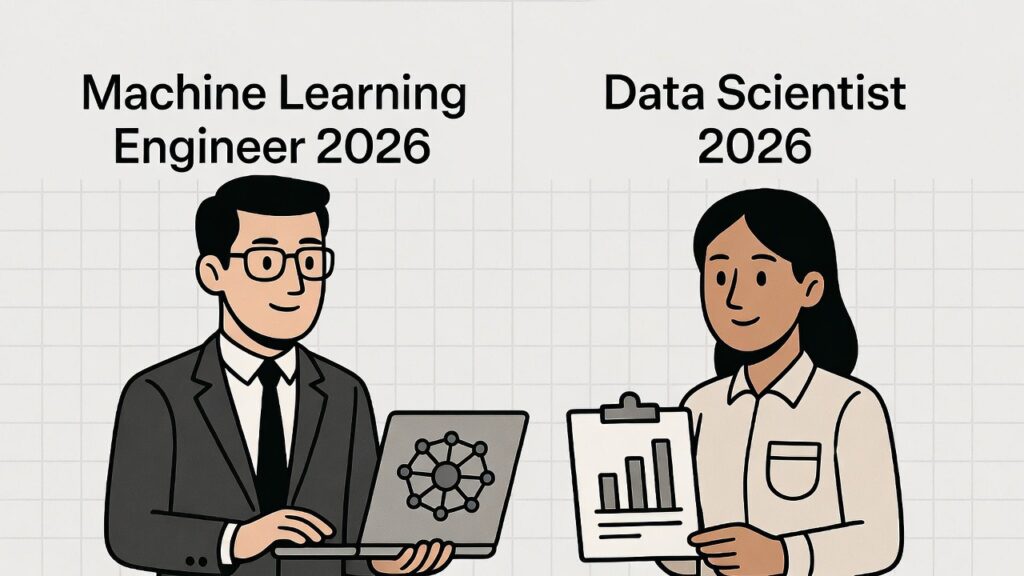
Machine Learning Engineer vs Data Scientist Comparison Guide
Choosing between a career in machine learning engineering and data science can be challenging, especially as both roles are critical in today’s AI-driven world.
This machine learning engineer vs data scientist comparison explains the differences in responsibilities, skills, salary, and career growth to help you make the right decision.

For a complete overview of AI career paths, read our guide on
AI developer skills 2026.
ML Engineer Overview
A machine learning engineer focuses on designing, building, and optimizing machine learning models that can scale in production environments.
They bridge the gap between data science and software engineering by turning experimental models into reliable systems.
- build and train machine learning models
- optimize model performance
- deploy models using cloud platforms
- maintain ML pipelines
Machine learning engineers often work with frameworks like TensorFlow and PyTorch while collaborating with AI engineers and data scientists.
Data Scientist Overview
A data scientist focuses on extracting insights from data using statistical analysis and machine learning techniques.
Their primary goal is to help organizations make informed decisions based on data patterns.
- analyze large datasets
- build predictive models
- create dashboards and visualizations
- communicate findings to stakeholders
Unlike ML engineers, data scientists spend less time on production systems and more on research and analysis.
Skill Differences
Understanding skill differences is essential in this machine learning engineer vs data scientist comparison.
| Skill Area | ML Engineer | Data Scientist |
|---|---|---|
| Programming | Python, Java, C++ | Python, R |
| Focus | Model deployment | Data analysis |
| Tools | TensorFlow, PyTorch, Docker | Pandas, NumPy, SQL |
| Core Strength | Engineering systems | Statistical modeling |
If you’re new to programming for AI, explore our guide on
AI programming languages for beginners.
Salary Comparison
Salary expectations are a key factor when choosing between these careers.
- Machine Learning Engineer: $115,000 – $170,000+
- Data Scientist: $100,000 – $160,000+
Machine learning engineers tend to earn slightly more due to their role in deploying scalable systems.
For updated salary insights, visit:
Career Opportunities
Both roles offer strong career opportunities as demand for AI and data professionals continues to grow globally.
Machine learning engineers can transition into roles such as AI engineer, MLOps engineer, or cloud AI architect.
Data scientists often move into senior analytics roles, data leadership, or specialized research positions.
Professionals who combine both skill sets will have a significant advantage in the evolving AI job market.
If you’re considering certifications to boost your career, check our guide on
AI certification pricing.
Download Free AI Developer Roadmap
Want to accelerate your AI career? Download our free AI Developer Roadmap 2026 and learn the exact skills, tools, and career path used by professionals.
Prefer direct download?
Click here to download instantly
.
Recommended AI Courses
Recommended Next Reads
Another key factor in this machine learning engineer vs data scientist comparison is how each role contributes to business outcomes. Machine learning engineers focus on building scalable systems that power real-time applications such as recommendation engines, fraud detection systems, and AI-powered automation tools. Their work directly impacts product performance and user experience. In contrast, data scientists focus on generating insights that guide strategic decisions, such as customer behavior analysis, forecasting, and business optimization. Both roles are critical, but they influence organizations in different ways.
It is also important to consider the learning curve associated with each career path. Machine learning engineering often requires a stronger background in software engineering concepts such as system design, APIs, and cloud deployment. Data science, on the other hand, demands a deeper understanding of statistics, probability, and data visualization techniques. Beginners who enjoy coding and building systems may find machine learning engineering more appealing, while those who prefer working with data and uncovering insights may gravitate toward data science.
As the AI industry evolves, the line between these roles is gradually becoming less distinct. Many companies now expect professionals to have a hybrid skill set that combines elements of both machine learning engineering and data science. This means that learning both disciplines can significantly improve your career prospects. Developers who understand how to analyze data and deploy models will be especially valuable in modern AI teams.
Conclusion
This machine learning engineer vs data scientist comparison shows that both careers are highly valuable and offer excellent growth opportunities.
Machine learning engineers focus on building scalable systems, while data scientists focus on analyzing data and generating insights.
Choosing the right path depends on your interests, whether you prefer engineering systems or working with data.

Leave a reply