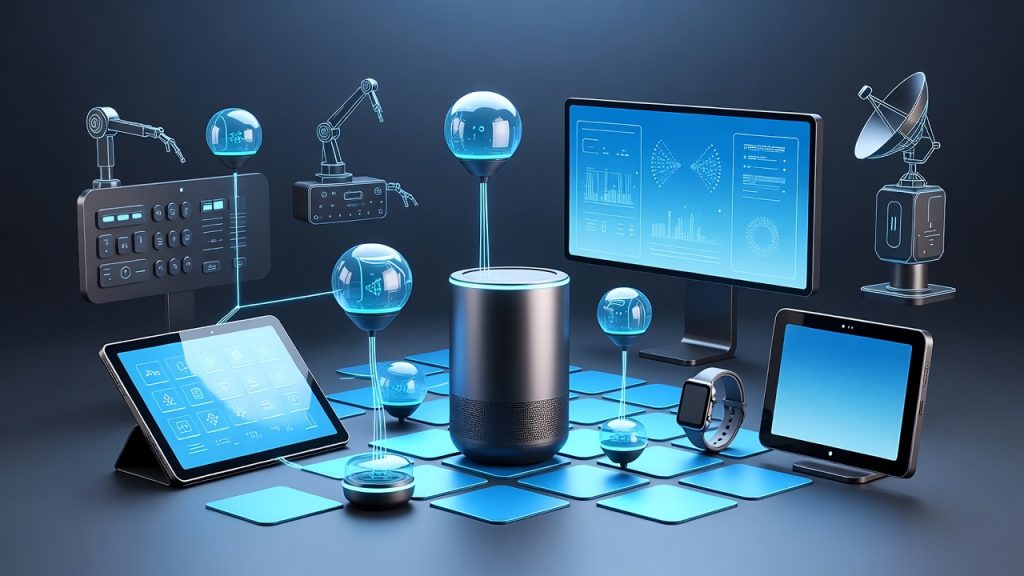
AI Controlled Devices Future: How Artificial Intelligence Is Changing Hardware Ownership

Introduction
The ai controlled devices future is no longer theoretical. Artificial intelligence is rapidly becoming the operating layer behind phones, laptops, vehicles, and smart home systems. Unlike traditional computing, where users directly controlled hardware through manual inputs, AI-driven devices increasingly make autonomous decisions based on behavior, context, and cloud intelligence.
This transformation is redefining what ownership means. Devices are evolving from passive tools into intelligent systems managed by algorithms, continuously updated models, and remote infrastructure.
As AI becomes embedded into operating systems, users gain convenience and automation — but also surrender portions of direct control.
AI-Native Operating Systems
One of the biggest drivers of the ai controlled devices future is the rise of AI-native operating systems.
Traditional operating systems responded only to commands. AI-native platforms anticipate needs before users act.
Key Characteristics of AI Operating Systems
- Context-aware automation
- Voice and natural language interfaces
- Behavior learning algorithms
- Continuous cloud synchronization
- Real-time optimization
Instead of launching applications manually, users increasingly interact through AI assistants that coordinate tasks across multiple services automatically.
This shifts control from user actions to predictive systems.
Examples Emerging Today
- AI copilots integrated into desktops
- Smartphones predicting workflows
- Adaptive battery and performance management
- AI-managed background processes
These systems improve efficiency but depend heavily on centralized intelligence.
Predictive Device Management
AI-controlled hardware increasingly manages itself.
Predictive device management allows systems to monitor usage patterns and automatically adjust performance, updates, and maintenance tasks.
Capabilities Enabled by AI
- Automatic software updates
- Self-optimizing battery usage
- Predictive failure detection
- Background security monitoring
- Resource allocation optimization
For example, modern devices may reduce processing power during inactivity or preload frequently used applications before launch.
While helpful, these features reduce transparency — users often cannot fully override AI decisions.
Cloud Dependency and Continuous Connectivity
The ai controlled devices future depends heavily on cloud infrastructure.
AI models require constant updates and large-scale computing resources unavailable locally on most consumer devices.
Why Cloud Dependency Exists
- AI models require massive datasets
- Real-time improvements happen server-side
- Security monitoring relies on shared intelligence
- Cross-device synchronization enhances personalization
As a result, devices increasingly require:
- Account authentication
- Internet connectivity
- Server verification
- Cloud processing access
This mirrors trends discussed in our pillar analysis:
Digital Ownership Technology 2026 Guide.
Security vs Freedom Debate
The expansion of AI-controlled systems has sparked a growing debate between security benefits and user autonomy.
Security Advantages
- Faster threat detection
- Automated vulnerability patching
- Improved fraud prevention
- Device theft protection
Freedom Concerns
- Limited offline functionality
- Reduced manual configuration control
- Vendor dependency
- Feature restrictions controlled remotely
Critics argue AI introduces “algorithmic governance,” where device behavior is shaped more by corporate policies than user preferences.
Supporters counter that modern cybersecurity threats make centralized intelligence necessary.
Industry Outlook: Where AI-Controlled Devices Are Heading
Industry analysts expect AI integration to expand across all device categories by the end of the decade.
Predicted Developments
- Fully conversational operating systems
- Autonomous device configuration
- Subscription-based AI capabilities
- Cloud-powered personal agents
- Hardware optimized dynamically through AI learning
Future devices may behave less like tools and more like collaborative digital partners.
However, this evolution strengthens platform ecosystems and increases long-term dependence on vendors.
Related analysis:
Cloud Dependent Devices Risks
The Ownership Question in an AI World
The ai controlled devices future raises a fundamental question: do users truly own devices governed by remote intelligence?
Ownership increasingly includes conditions such as:
- Active accounts
- Subscription access
- Software licensing agreements
- Cloud verification
Hardware alone no longer guarantees functionality.
This represents a major philosophical shift in computing history — one where access replaces possession.
Conclusion
The ai controlled devices future is redefining technology ownership through automation, predictive intelligence, and cloud dependency. AI-native systems promise smarter, safer, and more efficient devices, but they also reshape the balance of control between users and technology providers.
As artificial intelligence becomes the primary interface for computing, understanding these trade-offs will be essential for consumers, regulators, and businesses navigating the next era of digital ownership.


Leave a reply