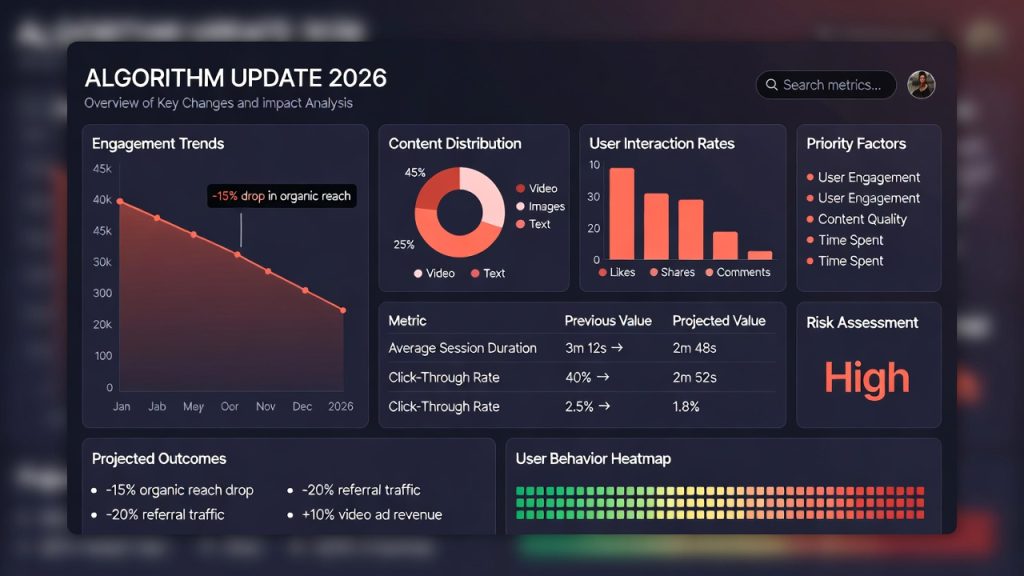
Ultimate Social Media Algorithm Changes 2026 Guide: Maximize Reach & Engagement
Social media algorithm changes 2026 are reshaping how content reaches audiences across YouTube, Instagram, TikTok, and emerging platforms. For creators, businesses, and marketers, understanding algorithm behavior is now one of the most important digital skills.
Algorithms decide which videos go viral, which posts appear in feeds, and which creators gain visibility. As explained in our digital culture tech 2026 guide, modern online culture is largely powered by AI-driven recommendation systems rather than chronological timelines.
This complete guide explains how social media algorithms work, why they change, and how creators can adapt strategies to grow consistently in 2026 and beyond.

What Are Social Media Algorithms?
Social media algorithms are artificial intelligence systems that rank and recommend content based on predicted user interest. Instead of showing posts in order of publication, platforms analyze behavior patterns to deliver personalized feeds.
The goal of every algorithm is simple: keep users engaged for as long as possible.
To achieve this, platforms evaluate thousands of signals including interaction history, viewing patterns, and engagement likelihood.
In 2026, algorithms are no longer simple ranking formulas — they are adaptive machine learning systems continuously retraining themselves using real-time user data.
Definition: Social Media Algorithm Changes 2026
Social media algorithm changes 2026 refer to updates platforms make to content-ranking systems to improve user experience, increase engagement, and prioritize new formats or features.
These updates may:
- Change how content is recommended
- Favor new content formats (e.g., short videos)
- Adjust engagement weighting
- Reduce spam or low-quality content visibility
- Encourage platform monetization features
Because algorithms evolve continuously, creators must adapt strategies rather than rely on fixed posting rules.
Why Platforms Constantly Change Algorithms
1. User Retention
Platforms compete for attention. Algorithm updates help keep users engaged longer.
2. Content Quality Control
AI improvements help filter misinformation, repetitive content, and low-value posts.
3. Feature Adoption
Platforms promote new features like short-form video, live streaming, or subscriptions.
4. Advertising Optimization
Better targeting increases advertising effectiveness and revenue.
5. Competition Between Platforms
When one platform introduces successful formats, others adjust algorithms to compete.
How Social Media Algorithms Work in 2026
Although each platform uses proprietary systems, most algorithms follow a similar structure.
Step 1: Content Analysis
AI evaluates video captions, visuals, audio signals, and metadata.
Step 2: Test Distribution
Content is shown to a small audience sample.
Step 3: Engagement Measurement
The system measures performance signals.
Step 4: Scaling Decision
High-performing content is distributed to larger audiences.
Step 5: Continuous Learning
Algorithms refine recommendations based on viewer reactions.
Key Ranking Signals in 2026
- Watch time — strongest ranking factor for video content
- Completion rate — percentage watched
- Saves and shares — indicate strong value
- Comments and interaction depth
- User viewing history
- Content consistency
- Audience retention curves
Likes alone matter far less than deeper engagement signals.
Platform-Specific Algorithm Trends
YouTube
- Prioritizes viewer satisfaction metrics
- Rewards long watch sessions
- Recommends content based on audience similarity
TikTok
- Rapid testing and scaling model
- Strong emphasis on completion rate
- Content can go viral regardless of follower count
- Reels prioritized over static images
- Original content favored over reposts
- Relationship signals affect feed ranking
Emerging Platforms
New platforms increasingly use AI personalization from day one, accelerating creator competition.
Real-World Examples of Algorithm Behavior
- YouTube recommending videos based on watch history patterns.
- TikTok boosting niche content once strong audience matching occurs.
- Instagram promoting short-form videos to compete with TikTok.
- Live streams gaining temporary ranking boosts during broadcasts.
These behaviors show that algorithms prioritize viewer satisfaction over creator popularity.
Common Algorithm Myths (Debunked)
Myth 1: Posting Daily Guarantees Growth
Consistency matters, but quality and retention matter more.
Myth 2: Hashtags Alone Increase Reach
Hashtags help categorization but do not override engagement signals.
Myth 3: Shadowbans Are Common
Most reach drops result from performance metrics, not hidden penalties.
Myth 4: Followers Determine Visibility
Modern algorithms prioritize interest matching over follower count.
How Creators Can Adapt in 2026
1. Optimize the First 5 Seconds
Retention begins immediately. Strong openings improve algorithm testing results.
2. Focus on Audience Retention
Keep viewers engaged through storytelling and pacing.
3. Create for Niche Audiences
Algorithms match content with interested viewers more effectively than broad targeting.
4. Use Analytics Consistently
Review retention graphs, click-through rates, and engagement trends.
5. Publish Consistent Content Themes
Consistency helps algorithms understand audience alignment.
The Role of AI in Algorithm Optimization
Creators increasingly rely on AI tools for:
- Title and thumbnail optimization
- Content idea generation
- Posting schedule prediction
- Audience sentiment analysis
- Performance forecasting
These tools help creators work alongside algorithms rather than compete against them.
Algorithm Changes and the Creator Economy
Algorithm updates directly influence income opportunities. Visibility determines sponsorships, ad revenue, and audience growth.
Creators who understand platform mechanics build sustainable careers by adapting quickly to change.
Learn more about monetization models in the Online Creator Economy guide.
Best Long-Term Strategy (Algorithm-Proof Growth)
- Build an email list or owned audience
- Diversify across platforms
- Create evergreen content
- Focus on audience trust over virality
- Develop recognizable content formats
Algorithms change, but strong audience relationships remain stable.
Future Impact of Social Media Algorithms
Looking ahead, algorithms will become even more personalized and predictive.
- Hyper-personalized feeds
- AI-generated recommendations
- Real-time audience matching
- Context-aware content delivery
- Creator performance prediction models
Creators who understand system behavior will gain exponential advantages.
Internal & Outbound Links
Key Takeaways
- Algorithms prioritize engagement and viewer satisfaction.
- Watch time and retention are critical ranking signals.
- AI increasingly powers content distribution decisions.
- Creators must adapt continuously rather than rely on fixed tactics.
- Long-term growth depends on audience trust and consistency.
FAQs
Do algorithms change often?
Yes. Major platforms introduce small updates continuously and larger ranking adjustments several times per year.
How can creators adapt?
Creators should monitor analytics, optimize retention, experiment with formats, and adjust content based on audience behavior.
Which platforms change most frequently?
YouTube, TikTok, and Instagram regularly update recommendation systems to improve engagement and compete with each other.
Are hashtags still important?
Yes, but mainly for categorization. Engagement metrics remain more important for ranking.
Can small creators still grow?
Absolutely. Modern algorithms prioritize relevance and viewer interest, allowing new creators to reach large audiences.

Leave a reply